

Key Takeaways
Women's health has always been treated as too complex to model precisely.
That excuse just ran out.
Digital twin technology, the ability to create a dynamic, continuously updated virtual replica of a patient's physiology, is moving from industrial engineering and cardiac care into the most intricate clinical territory in medicine: women's health. The conditions that have historically resisted early diagnosis, the hormonal complexity that defied standardized treatment, the care pathways that required a physician to hold 20 years of pattern recognition in their head just to recognize what was obvious in retrospect, all of it is now addressable through a technology that treats biological complexity as a feature rather than an obstacle.
The healthcare digital twins market was valued at $7.6 billion globally in 2026 and is projected to reach $73.2 billion by 2033, a compound annual growth rate of 38.2%. The U.S. market alone is expected to grow from $870 million in 2025 to $27.34 billion by 2035. That growth is not being driven by academic curiosity. It is being driven by health systems that have run out of patience with reactive care models and Women's Health founders who understand that the next generation of women's health platforms will be built on predictive, personalized clinical intelligence.
Women's health is where that intelligence matters most.
What a Digital Twin Actually Is in a Clinical Context
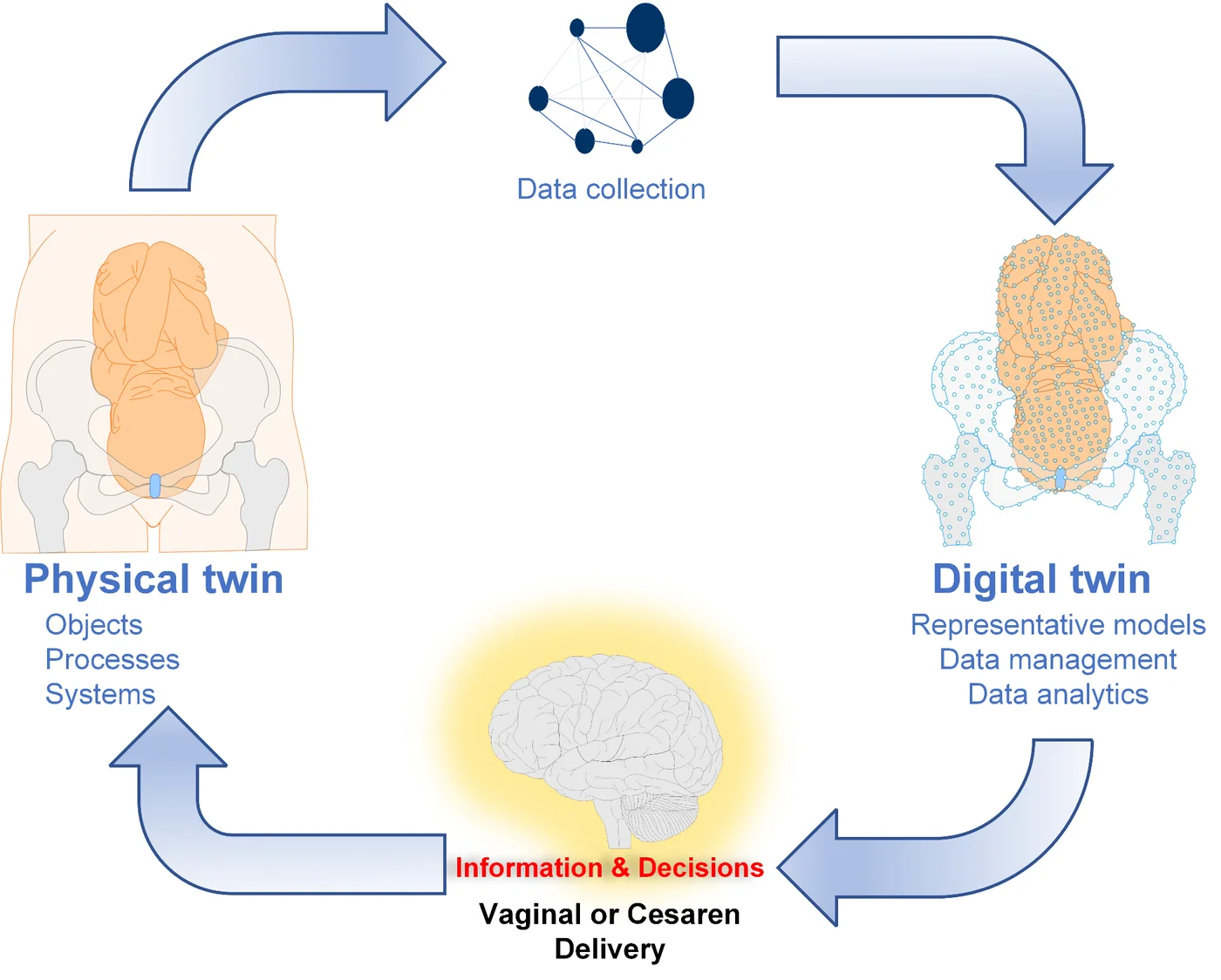
A digital twin in healthcare is not a static patient profile or an advanced EHR record. It is a living, continuously updated virtual model of an individual patient's physiology, built from a synthesis of electronic health record data, wearable sensor inputs, imaging, laboratory values, genomic data, and patient-reported outcomes.
The twin does not just reflect the patient's current state. It simulates future states. It can model how a patient's endometriosis will progress over the next three years without intervention. It can simulate how a PCOS patient's metabolic trajectory changes under different treatment protocols before any medication is prescribed. It can predict the likelihood of preterm birth based on cervical mechanics, maternal risk factors, and fetal growth patterns weeks before clinical signs become visible.
This distinction between reflection and prediction is what separates digital twin technology from everything that came before it. The EHR documents what happened. The digital twin models what is going to happen. For women's health, a specialty defined by conditions that have been systematically diagnosed late, misdiagnosed often, and treated reactively rather than proactively, that shift is not incremental. It is transformational.
Three primary applications of digital twins in healthcare have been validated in published research: personalized medicine, operational efficiency and resource management, and medical research advancement. All three converge in women's health with a clarity and urgency that no other clinical specialty can match.
Why Women's Health Is the Highest-Value Digital Twin Application
Women's physiology is not a variation of male physiology. It is a distinct biological system with hormonal cycles, reproductive organs, pregnancy-related adaptations, and aging transitions that have no male equivalent and that were systematically excluded from the clinical research that built modern medicine's diagnostic and treatment frameworks.
That exclusion produced the diagnostic delays we documented in earlier articles. It produced the misdiagnosis patterns that cost women with endometriosis an average of 4 to 11 years before a correct diagnosis. It produced the cardiovascular risk profiles that get attributed to anxiety until a woman has a second cardiac event. It produced the PCOS diagnostic delays that allow metabolic disease to accumulate silently for 7 years before anyone connects the pattern.
Digital twins address all of those failures at their root. Not by improving existing protocols, but by building individual patient models that do not rely on population averages derived from studies that never adequately represented women in the first place.
A Women's Health Digital Twin project currently underway using UK Biobank data is specifically designed to address under-treatment of cardiovascular disease in women by building predictive models for cardiometabolic risk based on female-specific hormonal and physiological markers. Columbia University's Professor Kristin Myers is using digital twins to model the female cervix during pregnancy, creating virtual replicas that can predict preterm birth risk and optimize cerclage procedures based on individual patient anatomy rather than population averages.
These are not theoretical possibilities. They are active research programs producing clinical evidence right now. The health systems and Women's Health companies that build their platform strategies around this technology in 2026 are not chasing a trend. They are building the infrastructure for the standard of care that will define women's health over the next decade.
The Six Highest-Value Digital Twin Applications in Women's Health
1. Maternal and Fetal Health Monitoring
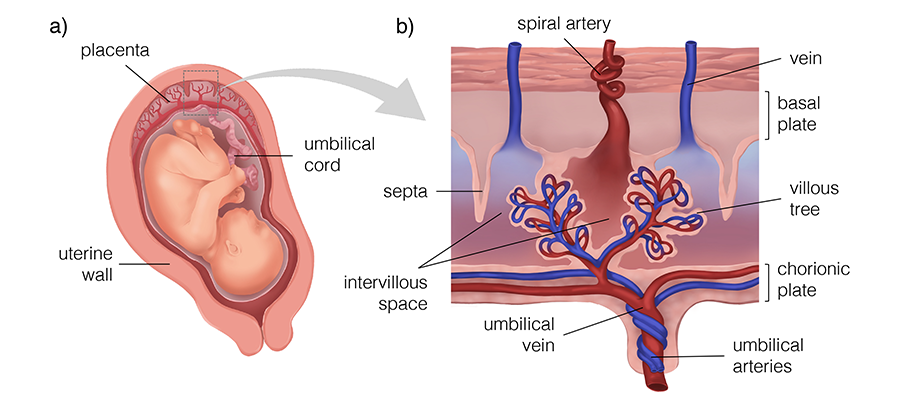
Digital twins in maternal medicine are among the most clinically validated applications in the entire women's health space. Research published in PMC confirms that digital twins improve the accuracy of fetal growth monitoring, enhance detection of fetal anomalies, reduce the need for additional diagnostic procedures, and enable more accurate prediction of fetal heart rate variability and brain development in high-risk pregnancies.
A maternal digital twin integrates data from prenatal visits, continuous fetal monitoring, maternal vital sign wearables, laboratory values, and genetic risk factors into a unified model that updates in real time throughout pregnancy. It can identify the early signatures of preeclampsia, gestational diabetes, and intrauterine growth restriction weeks before clinical thresholds are met, enabling intervention at a point where outcomes are still modifiable.
Over 85% of women experience some degree of obstetric trauma to the pelvic floor during childbirth, yet most never receive tailored monitoring or long-term care. Digital twins of the female pelvic floor, built from imaging, biomechanical testing, and patient-reported outcomes, can simulate the effects of labor, identify women at highest risk of long-term incontinence or prolapse, and guide postpartum rehabilitation in a way that generic protocols never could.
2. Endometriosis Diagnosis and Disease Modeling
Endometriosis has resisted early diagnosis for generations because it presents differently across patients, progresses at different rates, and historically required surgical confirmation to diagnose definitively. ACOG's Clinical Practice Guideline 11 in February 2026 took the first formal step toward presumptive clinical diagnosis based on symptoms and history alone. Digital twins take the next step.
A digital twin built for endometriosis management synthesizes symptom severity data, hormonal markers, imaging findings, pain response patterns, and treatment response history into a model that can predict disease progression, simulate the likely outcome of different treatment approaches, and identify the patients most at risk of developing deep infiltrating endometriosis or ovarian endometriomas before those complications require surgical intervention.
For a condition that costs $78 billion annually in healthcare expenditure and lost productivity, even a partial reduction in diagnostic delay through predictive digital twin modeling represents a significant financial and clinical return.
3. PCOS Metabolic Risk Prediction
PCOS is the most common endocrine disorder in women of reproductive age, affecting 8 to 13% of women globally, and its metabolic consequences compound silently for years before they become clinically visible. A PCOS digital twin that models hormonal patterns, insulin sensitivity, lipid profiles, and inflammatory markers over time can identify the patients on a trajectory toward type 2 diabetes and cardiovascular disease years before traditional diagnostic criteria are met.
This is the difference between managing PCOS reactively, treating each metabolic complication as it develops, and managing it proactively, intervening in the hormonal and metabolic environment before complications accumulate. The long-term cost reduction from that shift is not marginal. PCOS-associated healthcare costs in the United States alone reach $8 billion annually, concentrated almost entirely in the management of complications that earlier intervention would have prevented.
4. Menopause and Cardiovascular Risk Modeling
One billion women worldwide will have reached menopause by 2030. The cardiometabolic risk that accelerates in the perimenopausal and postmenopausal period, driven by estrogen decline, represents one of the most significant and undertreated women's health challenges in the entire healthcare system.
A menopausal digital twin that models the relationship between hormonal transition, lipid metabolism, blood pressure trajectory, bone density decline, and cardiovascular risk factors can identify the women who need aggressive preventive intervention before they become the cardiac events that appear in hospital quality metrics years later. The Women's Health Digital Twin initiative at UK Biobank is specifically targeting this application, building predictive cardiometabolic models based on perimenopausal physiological data to address the cardiovascular care gap in women.
5. Clinical Trial Design and Drug Development
Digital twins are transforming clinical research by enabling in silico trials that can simulate treatment responses in virtual patient populations before traditional trials begin. For women's health, where clinical research has been chronically underfunded and where women were systematically excluded from trials that generated the evidence base modern medicine relies on, this application has particular urgency.
In silico clinical trials using digital twins can optimize drug dosing protocols for female-specific pharmacokinetics, simulate contraceptive efficacy across diverse patient populations, model fertility treatment outcomes based on individual ovarian response patterns, and test surgical approaches on virtual anatomical models before they are performed on real patients. Each of those applications produces evidence faster, at lower cost, and with better sex-disaggregated validity than the trial designs that produced the data gaps we are now trying to close.
6. Population Health and Preventive Care
At the health system level, digital twins extend beyond individual patient models to population-level simulation. A health system that builds a digital twin of its attributed women's health population can model the downstream clinical and financial impact of closing PCOS diagnostic gaps, optimizing postpartum follow-up rates, or improving endometriosis detection timelines before those programs are funded and implemented.
This application is particularly valuable for health systems operating under value-based care contracts, where the financial return on preventive investment needs to be projected before capital is committed. A population-level digital twin turns that projection from an educated estimate into a data-driven model.
What Clinical Readiness for Digital Twins Requires
Digital twin technology does not deploy into a vacuum any more than agentic AI, Epic Stork optimization, or Women's Health platforms do. It deploys into a clinical environment with existing data infrastructure, existing workflows, and existing governance structures. If those elements are not ready, the digital twin cannot perform.
Clinical readiness for digital twin deployment in women's health requires:
- Data infrastructure readiness. A digital twin is only as accurate as the data it is built on. Health systems must audit their EHR data quality, assess the completeness of structured data capture in women's health workflows, and confirm that wearable and patient-reported data can be ingested via FHIR-compliant APIs before a digital twin platform is deployed. Fragmented data produces fragmented models.
- EHR workflow integration. Digital twin insights that live in a separate application outside of Epic are insights that clinicians will not act on at the point of care. The integration architecture must deliver twin-generated predictions and care alerts directly into the clinical workflow, whether through an Epic SmartApp, a CDS Hooks integration, or an Ambulatory workflow configuration that surfaces the relevant insight at the right moment in the clinical encounter.
- Clinical validation of the model logic. Every predictive model inside a women's health digital twin must be validated against clinical evidence and reviewed by board-certified specialists in the relevant condition. A PCOS metabolic risk model that was not developed with OB/GYN and endocrinology input is a model that clinicians cannot trust and will not use.
- Governance and explainability. The same governance requirements that apply to agentic AI apply to digital twins. Clinicians need to understand how the model generates its predictions, what data it weighs most heavily, and where its confidence intervals narrow. A prediction without explainability is not a clinical tool. It is a black box, and clinical adoption of black boxes in women's health is zero.
- Equity by design. A digital twin built primarily on data from white, privately insured, higher-income patient populations will produce predictions that are less accurate for the women who already face the worst health outcomes. Equity must be built into the training data architecture from the beginning, not retrofitted after disparities are documented in outcome data.
What Women's Health Founders Building Digital Twin Platforms Need to Know
The Women's Health companies building digital twin capabilities into their platforms in 2026 are operating in an emerging competitive space with very little standardization and very high health system scrutiny. Here is what determines whether a Women's Health digital twin product can actually be deployed in a health system environment.
EHR integration architecture is not optional. A digital twin that generates predictions in a proprietary environment outside the EHR will not be adopted by clinical teams. The integration must be bidirectional: pulling data from Epic or Oracle Health and pushing predictions back into the clinical workflow where they can be acted on.
Clinical evidence is the differentiator. The Women's Health digital twin companies that will win health system contracts are the ones that can point to peer-reviewed validation of their predictive models, real-world outcome data from deployed health system environments, and a clinical advisory structure that demonstrates ongoing model review and updating as evidence evolves.
The regulatory pathway must be defined. FDA guidance on AI and machine learning-based software as a medical device applies to digital twin platforms that influence clinical decisions. Founders who have not mapped their product to a specific regulatory classification are creating a compliance liability that will surface in IT security reviews and legal committee reviews and kill deals that should have closed.
The Faulkner Group's Digital Twin Advisory Work
The Faulkner Group has added Digital Twin Strategy and Clinical Readiness to its advisory service portfolio for women's health technology companies and health systems. This work sits at the intersection of our clinical expertise in women's health, our operational fluency in Epic EHR environments, and our emerging practice in agentic AI architecture.
For health systems, we assess digital twin readiness across data infrastructure, EHR integration, clinical workflow, governance, and equity design. For Women's Health founders building digital twin capabilities, we provide clinical validation guidance, EHR integration architecture review, health system deployment readiness assessment, and support for the clinical evidence development strategy that health system procurement and payer relationships will require.
The technology for meaningful digital twin deployment in women's health exists today. The clinical readiness infrastructure to use it effectively does not yet exist in most health systems. That is the gap The Faulkner Group closes.
If your health system is evaluating digital twin technology for your women's health service line, or your Women's Health platform is building predictive modeling capabilities that need to deploy into health systems, an Advisory Briefing is where this work begins.